

The Signal
A Versified Apocalypse about a Traffic Light

Forgive the introductory note. Below is a narrative poem in blank verse. It is not long enough to be published in separate installments (after the style of the venerable Robert Charboneau), yet it is perhaps too long for those better tuned to the lyric. My expectations for sustained attention are therefore diminished. My love for you, however, is not. I hope it will entertain, but receive it as you may. I will add further remarks at the end for those who enjoy a little context or commentary.
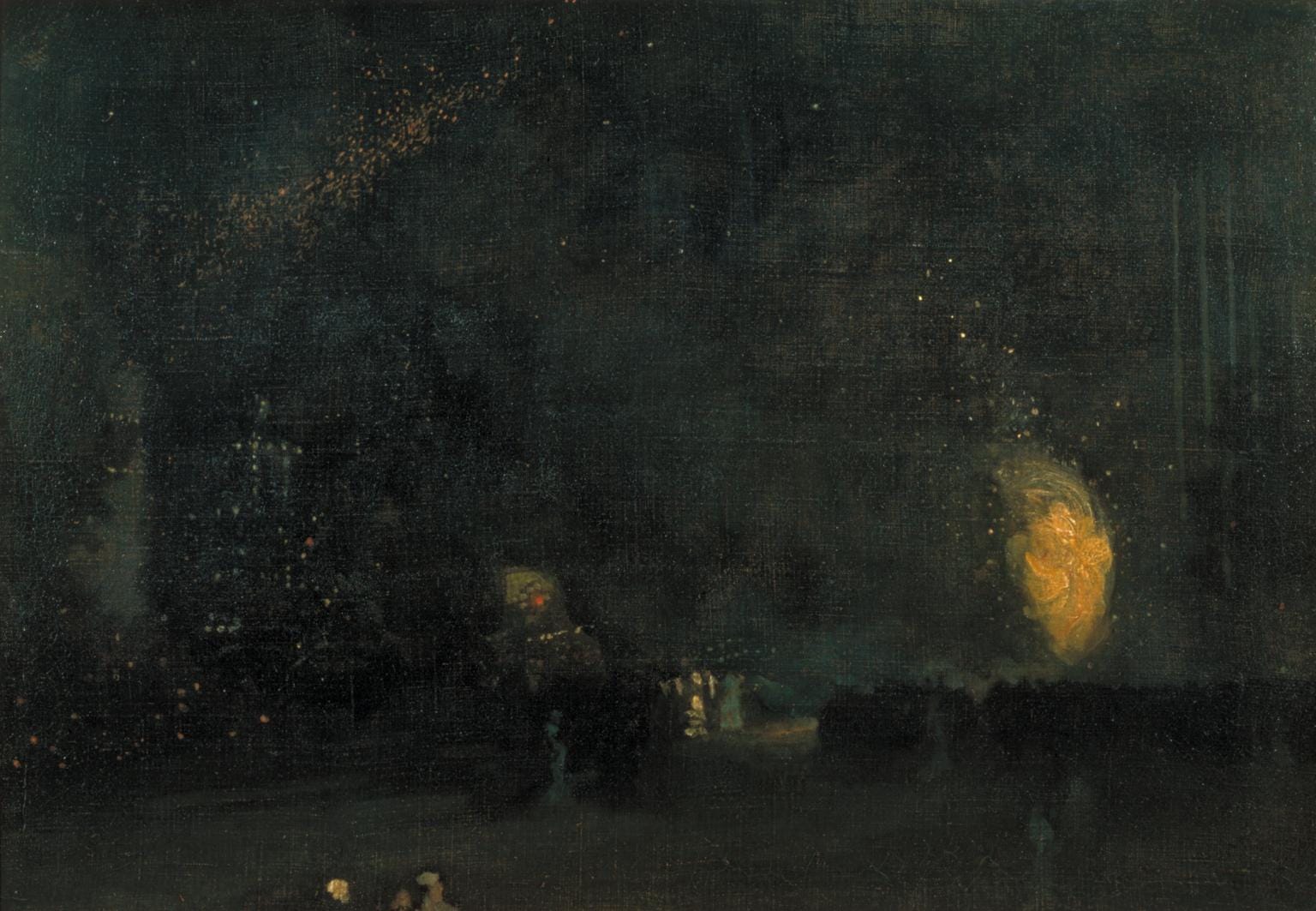
                    The Signal

                             I

The Signal stands—a silent prophetess
accustomed now to inattentive eyes,
invisibly ensconced in the neglect
paid prior-use by dry pragmatic minds,
whence uselessness is damned (and whence derived).
The intersection—O, that cross we bore
before direction ceased to interest us—
persists in accidental imagery
still nagging like forgotten thoughts. One street
is now defunct; we call it Barren Way,
and bare it is: across no traffic dares
to interfere with progress up or down
the perpendicular, Relentless Road.

Some time ago (we hear) our fathers turned;
to what effect we cannot say, but still
the relic speaks of patterns from the past,
such habits as divergence. And in fact,
our modern archeology reveals
an even more complex, preceding sort
of signal, fit with lights of red and green
(as well as yellow) suited severally
to precepts obsolete, whereas our own,
the heir, retains but one: the yellow light.
What else but yield?  Years have blithely passed
without the slightest impulse otherwise.
To yield is not to stop nor even slow,
but just to heed the right to go.
                                                         With speed
we thus converge upon our current plight:
Our sun, our yellow herald, our delight,
accumulates a dim and reddish hue.
Accordingly, our scientists reflect,
some course of action must be ascertained
by a committee—formed, they recommend,
with great expedience.
                                          Elections come;
elections go, not one without a call
for urgent action. Acting urgently
at last the voters pick their candidates
and action comes. “We must maintain our power,”
appointed personnel pronounce one day.
(Several weeks had passed in stale debate
after some had favorably portrayed
the possibility of acclimation
to total darkness.) Energy, no less,
“must be conserved”; thus physics’ modest law
of conservation suffers modal flair.

The edict stirs the folds, enflamed by fear,
and shepherds poised in studied nonchalance
corral the conscientious citizens
in pens of palliative sacrifice.
So minor inconvenience spreads relief
among the faithful pharisaical,
and others fall in line. Flip down that switch
and think of all the money that you’ll save,
enough to cushion your impending fall
into the grave—or so the jingle goes,
played hourly upon the radio;
amusing irony, we all believe.

                            II

With signs and slogans, songs and simple steps
we ease our guilty minds beside the still,
reflective surface of the Stream of Self-
Assurance (measurement of our success
is left, at best, a question). Yet despite
the guarantees, the tide of energy
does not recede (some revenues increase),
and leaders meet to face the catered meal
of compromise. At length they so resolve:
“We must maintain our power. Yes, the sun
resists our legislation, yet we must
survey the ways in which our services
unduly drain the stores that we should save.”

Unanimous, they acquiesce. The votes
are cast; the motion passes; hope endures
no less that trends reflect that second law
which, since the first transgression, holds its sway
and never bears transgressing.
                                                        In the end,
the well-conceived is scarcely well-achieved:
Evaluations done, departments deem
the dutiful austerity applies
to functions less essential than their own.
They reconvene, resenting now the time
and inconvenience spent to entertain
impractical restraint. Ashamed to shy
from public measures, leaders contemplate
alternatives ostensibly severe.
Their straining sights alighting finally
upon the Signal, they decide to stop
its operation for the good of all.

There are, of course, objections to the act,
most of which the elderly propound.
They claim history and tradition warrant
some consideration for its place.
In diplomatic fashion, the elect
assure us that the Signal will remain
a cherished point of interest for the town,
attractively displayed (donations made
are tax deductible) and duly praised
in a brochure for visitors.
                                                Allayed,
misgivings fade, and all prepare their hearts
to celebrate the designated day:
“The Great Unplugging,” formally decreed—
festivities to follow, which include
a unified, commemorative commute.

                            III

Arranged in haste, the sacred day arrives;
the ceremony’s quickly underway.
A happy mantra rises from the crowd:
Maintain our power!—a phrase now well ingrained
upon the hearts and bumpers of our town.
Maintain, Maintain our power! Maintain our power!
A hand beside the plug awaits the cue
from one that signs above a podium.

Now speech like moisture gathers in the air,
now swirling, now descending as a fog
while fingertips unconsciously caress
their keys like rosaries. The word, the hand,
the cry across the land—Maintain our power!
and then the clamor as the cars are filled
with every able body, every ear
now filled with cheers and corresponding roars
from ready engines. Then the blast resounds
the last explosive “Go!” Relentless flows
with traffic, slowly first, then steadily
beneath the banners stamped iconically
in green with jagged bolts and trees (the leaves
like cash), and happily the drivers note
the freedom, the enthralling liberty
diffused by crossing Barren’s faded way
without a signal.
                                Vehicles advance
along the road—the smiles enclosed within
refracted through distorted shapes by glass
reflecting, as they pass, the circumstance—
when, on the walk the cord still loosely cast
in idle distance from its former source,
the Signal suddenly reactivates.
It flashes, slowly first, then steadily
in yellow, amber, orange, and lastly red.

A man employed in solitary watch,
bewildered, fears some fault to be his own,
and draws with frantic hands his firearm,
demolishes the bulb, then disappears,
escaping to the emptiness around
with his embarrassed face. The drivers, dazed
a twinkling instant, barely check their pace
before dismissing the phenomenon
as one of those inconsequential flukes
attendant on technology—its realm
of gnostic cant as prone to casual blame
as government affairs. The unity
continues both in mind and course.
                                                                Unseen
a fissure forms down Barren Way, a split
unwittingly the wheels kiss in turn.

Now sound of sounds, immense as silence, rends
the sky, precipitately widening
the nascent crack into a vast abyss.
The world appears to fold upon itself
while vehicles of all designs collide
and pour into the thirsty gulf, where blood
and oil mix with fire as numerous
explosions indiscriminately toss
the parts of cars and bodies in the air.

Some forward, others backward sliding fall,
deficient fare to fill so ravenous
a canyon, guzzling with grim dispatch.
Not one can halt despite pervasive red
imploring stupid feet to find the brake;
too tardily they reach, as earth recedes
to rush the wreckage through the crushing din.

The table rudely cleared, the banquet done,
across the vacant road reverberates
a final belch. Upon its lonesome perch,
the Signal quakes. The sun explodes.
The end. I first wrote this as a short story back in the early aughts, but it included much of the rhythm and assonance I retained here. When I shared it with a group of artists in San Diego county (called The Art Mafia), one belovéd member said it reminded her of a kind of a morbid Dr. Seuss. I took it as a compliment. A few years later, a literary and pedagogical mentor of mine recommended that I practice some blank verse to grow as a poet, and I decided to convert the story into a narrative poem. Since then I have revised it many times. I’ve been reluctant to impose longer works on my patient audience, but I figure if Robert can confidently share his extended epic about trees, then my weird little cataclysm is in good company.
The story is set in a world conceptually adjacent to ours, if not exact, and the physics don’t really work for our galaxy—though the supernatural element hopefully precludes any nitpicking on that score. (God can do what He wants.) The impetus of for story also came largely before the “climate change” hysteria had reached its climax, but there is “nothing new under the sun” (to borrow an apt phrase) and any cause du jour might have served as the background for the more important exploration of human motives, the manipulation of fear, willful blindness, etc. Indeed to reduce the purport to a given political stance is to miss the whale for its barnacles, so to speak. Hopefully the whimsy does not hamper its potential for insight, but in the end I’d rather it fail at being profound than fail at being fun. Thank you for reading!
It is, as Peter said, dense. I've read it three times, and I still have a tough time following the plot. I think maybe the issue is with the narrator, who is a character in the story, a member of the community, but I'm unclear about his attitude toward events. There's layers of intellect and irony to peel back to get to it. This is by design, I think. The story is about ideas and not necessarily people, and the ideas are maybe over my head. I'm missing a skeleton key.
But that said, there are so many great turns of phrase, so many verses that sound Swiftian or Popean (I think I've called you Augustan before). Maybe the satirical tone also makes me think of them. The rhythm is propulsive, and the occasional rhymes are energetic and keep you reading.
Great lines like "Now speech like moisture gathers in the air" and "The intersection—O, that cross we bore / before direction ceased to interest us—" and, what I think is the theme of the poem,
"To yield is not to stop nor even slow,
but just to heed the right to go."
A pleasure to puzzle over your work.
Narrative poetry on Substack is likely the saving grace of 2025, so thank you for adding to the conversation! This is a lot of fun: tonal consistency, cognitive originality, satisfying irony. I felt like I missed a stanza because while I fully expected the supposedly obsolete traffic signal to turn out to be essential, I couldn't trace how it triggered an apocalyptic event. I went back and read the beginning of the poem to see what I had missed. Then I realized that maybe this wasn't supposed to be a folktale about one small town but a global symbol. So not just one traffic signal but all are down ? Traffic signals are no longer important because people are no longer driving? People are flying? Ultimately I wasn't able to sleuth my way to the ending. My favorite bits are the politicians doing everything to stay in power: "We must maintain our power. Yes, the sun / resists our legislation, yet we must / survey the ways in which our services / unduly drain the stores that we should save.” The fact that they are speaking to the issue means this isn't a solitary traffic signal but an important symbol. The sun is complicit! But how?